CaseIH Puma 130 vs Zetor Forterra 125
Side-by-side specs comparison
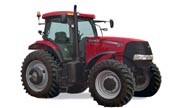

Verdict by the numbers
- The CaseIH Puma 130 is more powerful than the Zetor Forterra 125: 131 HP versus 130 HP (+1 HP, +1%).
- The CaseIH Puma 130 is the more recent model: production started in 2011, versus 2009 for the Zetor Forterra 125.
- The CaseIH Puma 130 is heavier: 6168 kg versus 4660 kg for the Zetor Forterra 125.
- The Zetor Forterra 125 offers a higher rear lift capacity: 5850 kg versus 3583 kg.
Full specs comparison
| CaseIH Puma 130 | Zetor Forterra 125 | |
|---|---|---|
| Power | 131 HP | 130 HP |
| Production years | 2011–2013 | 2009–2012 |
| Fuel | Diesel | Diesel |
| Cylinders | 6 | 4 |
| Displacement | 6.7 L | 4.2 L |
| Weight | 6 168 kg | 4 660 kg |
| Drive | 4WD | 4WD |
| Transmission | Power shift | — |
| Gears (fwd/rev) | 18 / 6 | 24 / 18 |
| Rear lift capacity | 3 583 kg | 5 850 kg |
| Wheelbase | 273 cm | 239 cm |
| Length | — | 467 cm |
| Cab | Yes | Yes |